Author Profile

Author Name: SAIMA BANOO
Course/Position: Assistant Professor
College: SGVC, Tantia University, Rajasthan
Department/Institution: Department of Veterinary Medicine, SGVC, Tantia University, Rajasthan
Article ID: AP-V01-I05-19
Author Email ID: saimabanday22@gmail.com
Co-authors’ names: RAJA FARHAN BIN BASHIR, TANZEL UL ISLAM, TAHIR MANZOOR
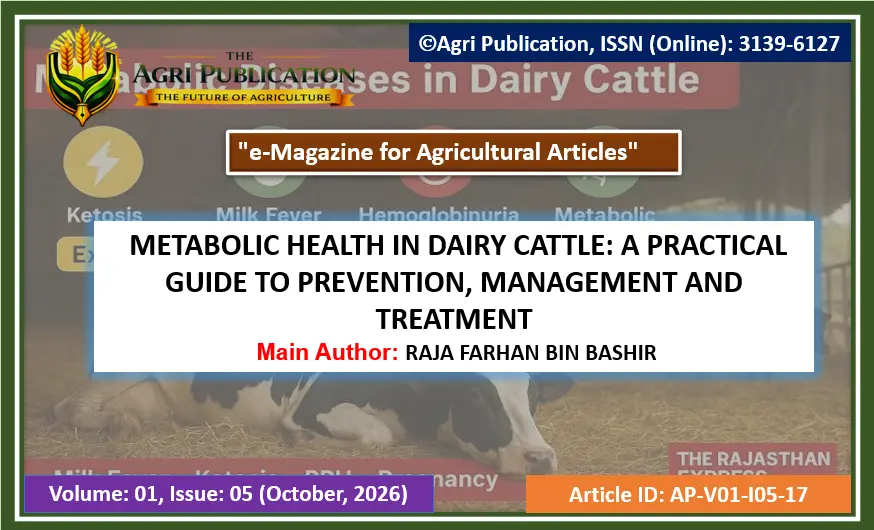
Article Title: METABOLIC HEALTH IN DAIRY CATTLE: A PRACTICAL GUIDE TO PREVENTION, MANAGEMENT AND TREATMENT
Introduction
Metabolic disorders are major health challenges in dairy cattle, particularly during the transition period, which extends from approximately three weeks before to three weeks after calving. During this period, increased nutrient demands for fetal growth and milk production, coupled with inadequate feed intake and hormonal changes, can disrupt energy and mineral metabolism. These disturbances may lead to ketosis, fatty liver, hypocalcemia and subacute ruminal acidosis, adversely affecting milk production, reproductive performance, immune function and animal welfare.
Both clinical and subclinical disorders can cause substantial economic losses to dairy farmers. Effective prevention requires appropriate body condition management, balanced transition diets, adequate mineral supplementation, gradual adaptation to lactation rations and regular monitoring of metabolic health. Early diagnosis and timely, condition-specific treatment can further reduce complications and improve recovery. Effective prevention and management of metabolic disorders in dairy cattle through proper nutrition, regular health monitoring, and appropriate transition-cow management are essential for reducing disease incidence, improving reproductive performance, maintaining milk production, and ensuring the health and productivity of dairy herds.
Keywords: Dairy cattle, metabolic disorders, transition period, ketosis, hypocalcemia, fatty liver, prevention, herd health, Metabolic Health in Dairy Cattle.
Share your achievement with your friends! 🥳
Navigation
- Editorial Board
- Submit Article
- Publication Fee
- About Us
- Contact us
- Privacy Policy of Agri Publication
- Terms and Conditions of Agri Publication
- Disclaimer | Agri Publication
- Refund and Cancellation Policy
- Copyright and Plagiarism Policy of Agri Publication
- Home
- AUTHOR GUIDELINE
- pay online for memebership
- Premium Membership Application